The head, attached to the top of the vertebral column, is balanced, moved, and rotated by the neck muscles When these muscles act unilaterally, the head rotates When they contract bilaterally, the head flexes or extends The major muscle that laterally flexes and rotates the head is the sternocleidomastoid In addition, both muscles workingThe pain in the back of your head occurs when one or a combination of factors affect your brain The Mayo Clinic says that these factors can be chemical activity in your brain, the nerves of blood vessels surrounding your skull, or the muscles at the back of the head and neck 1 Also, some people are more prone to headaches than others Knowing what causes headaches can help you know how toHuman head (anterior view) The human head is more than just a nuisance responsible for your headaches It is a complex anatomical structure weighing up to five kilograms that rests on the bony skull and in turn, the neckIn addition to the evident ears, eyes, nose, and mouth, the head supports a variety of other important structures Muscles of mastication
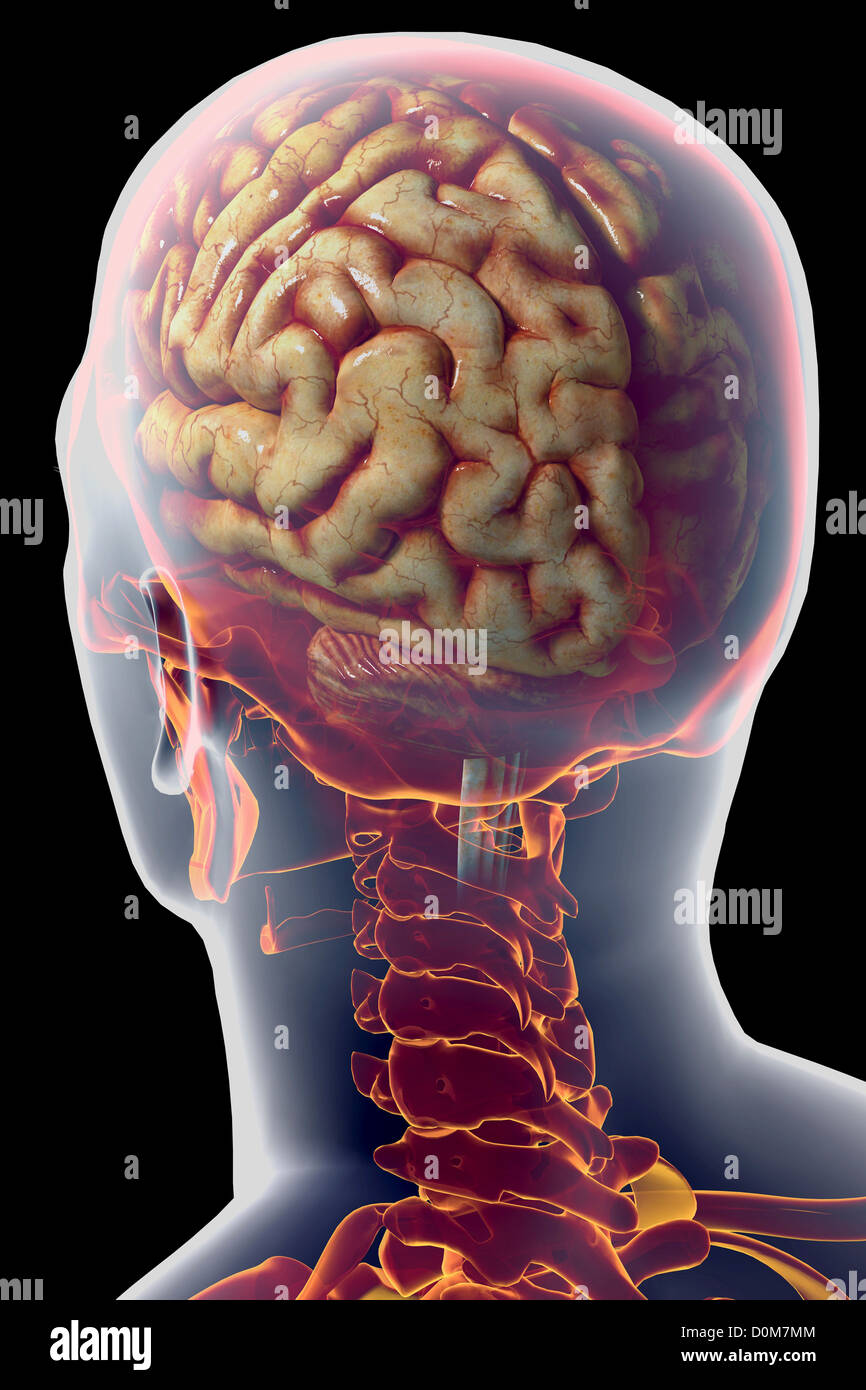
Rear Three Quarter View Of The Human Brain Within The Skull Stock Photo Alamy
Human back head structure